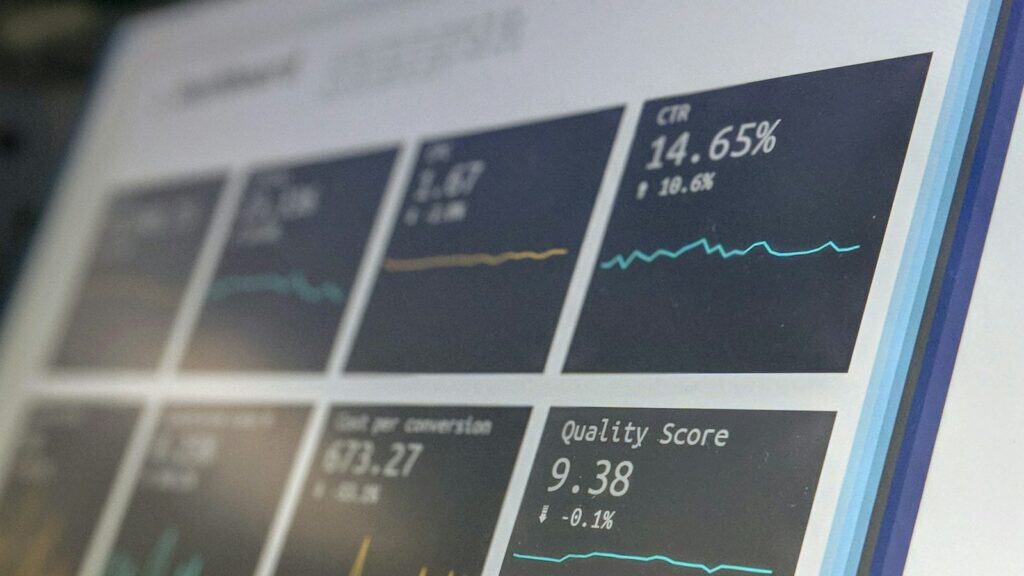

Start with Google Ads if people already search for what you sell. Start with Facebook and Instagram ads if they do not. That one question settles it for most businesses. A plumber, a lawyer, or an emergency locksmith should run Google first, because demand already exists and you just need to be there when someone types it. A new product nobody is searching for needs Meta, because you have to create the demand.
Everything else is a detail. Cost, targeting options, creative formats, they all matter, but they matter less than whether there is search volume for your offer.
The advice you usually get is “use both”. That is true eventually, and useless on day one when you have $2,000 and need leads this month. So here is a real framework for picking one.
What is the actual difference between Google Ads and Facebook ads?
Intent versus interruption. On Google, someone tells you what they want by typing it. On Meta, you interrupt someone who was not thinking about you at all.
That difference drives everything downstream. Search leads cost more because you are competing for a small number of people who are actively in the market right now. Meta leads cost less because the supply of attention is huge, but most of that attention is not ready to buy.
It also changes what you have to be good at. On Google, you win with keyword selection, negatives, and a landing page that matches the search. On Meta, you win with creative. A great Meta account with boring ads loses to a simple account with a great video.
How do Google Ads and Facebook ads compare side by side?
Here is the honest comparison, using the confirmed benchmark data from WordStream’s 2026 Google Ads benchmarks where it exists.
| Factor | Google Ads (Search) | Facebook and Instagram ads |
|---|---|---|
| Average cost per click | $5.42 (WordStream, 2026) | $0.78 projected, sources range to about $1.72 |
| Average cost per lead | $70.11 (LocaliQ, 2025) | $27.66 (LocaliQ, 2025) |
| Buyer intent | High. They typed the search. | Low to medium. You interrupted them. |
| How you target | Keywords and location | Interests, behaviors, lookalikes, broad |
| What wins | Keyword and landing page match | Creative and offer |
| Speed to first leads | Days, if search volume exists | Days, but needs creative testing |
| Ceiling on volume | Capped by search volume | Very high, capped by creative |
| Best fit | Existing demand | Demand you have to create |
What this means for you: Meta wins on price per lead, Google wins on lead quality, and neither of those facts tells you which to run. The fit row is the one that decides it.
One note on the data. Google Ads benchmarks are drawn from a consistent sample of 13,474 US search campaigns, so they hold up well. Meta benchmark data is much less consistent between sources, which is why the Meta column shows a range. The lead cost figures for both channels come from LocaliQ’s search advertising benchmarks. We break both down in how much Google Ads cost and how much Facebook ads cost.
Which businesses should start with Google Ads?
If someone has a problem and their first move is to open Google and type, that is you. The demand already exists. You do not need to convince anyone they need the thing, you just need to show up.
Start with Google if you are:
- An emergency or urgent service. Plumbers, locksmiths, water damage restoration, tow trucks, emergency dentists. Nobody scrolls Instagram and decides their pipe is leaking.
- A professional service people shop for. Lawyers, accountants, IT support, commercial cleaning. Attorneys pay $9.87 a click and about $131.63 a lead in the 2026 data, which is expensive and still worth it, because one case pays for a lot of clicks.
- Selling replacement parts or specific products. If a customer knows the exact model number they need, they are typing it, not scrolling for it.
- A local service with clear search terms. HVAC repair, pest control, garage door installation, auto repair. Automotive repair converts at 15.51% on search, which is very high, because the searcher already has a broken car.
The test is simple. Type your main service plus your city into Google. If you see four ads above the results, there is demand and competitors are already paying for it. Our free keyword suggestion tool will show you whether the terms you care about actually get searched.
Which businesses should start with Facebook and Instagram ads?
If nobody knows to search for your product, Meta is the only sensible first move. You cannot bid on a search that does not happen.
Start with Meta if you are:
- Selling something new. A product category that did not exist two years ago has no search volume. You have to show people what it is before they can want it.
- Selling on impulse or on looks. Apparel, jewelry, home decor, food and drink brands. These sell because someone saw them and wanted them, not because they went looking.
- A lifestyle or community brand. Gyms, studios, coaching, membership products. The buying decision is emotional and visual, which is what the feed is built for.
- Chasing volume at a low price point. If your product costs $40 and you need thousands of buyers, a $5.42 search click is hard math. A cheap Meta click is much easier.
Meta also works for local service businesses, but usually as the second channel, not the first. It fills the top of the funnel and builds an audience you can retarget. It rarely delivers the same close rate as someone who searched for you.

When does running both actually make sense?
When Google is already profitable and you have hit the ceiling on search volume. That is the real trigger, and it is a good problem to have.
Search volume is finite. Only so many people type “emergency plumber Denver” this month. Once you are showing up for all of the searches worth buying and your cost per lead is stable, more budget on Google just means paying more for the same leads. That is when Meta earns its place, by reaching people before they search.
The other good reason is retargeting. Meta is very good and very cheap at getting back in front of people who visited your site from search and did not convert. That is a small budget with a strong return, and it is worth running even while Google is still your main channel.
The bad reason to run both is fear of missing out. Splitting a small budget across two channels usually means neither gathers enough conversion data to optimize, so both underperform. One real test beats two half tests every time.
How should you split the budget if you run both?
Fund the proven channel first, then give the second one enough to be a real test rather than a token.
A workable starting split for a business where search already works is roughly 70% Google and 30% Meta, with the Meta side split between retargeting and one cold audience. If Meta is your proven channel and search is the experiment, flip it.
Whatever the split, the second channel needs a floor. Below roughly $1,000 to $1,500 a month, neither platform gathers enough conversions to learn, and you end up with data too thin to make a decision from. If you cannot fund both above that floor, do not split yet.
Judge the split on return, not on volume. Set a target return on ad spend for each channel and hold both to it. If you have not set one, start with our explainer on ROAS, then use break even ROAS to work out the floor below which a channel is losing money.
Common questions
Are Facebook ads cheaper than Google Ads?
Per click and per lead, yes. LocaliQ’s 2025 data put Facebook cost per lead at $27.66 against $70.11 for Google Ads. The Meta lead is usually colder though, so the gap narrows once you compare cost per closed sale instead.
Should a small business run Google Ads or Facebook ads first?
Google first if people search for what you sell, Meta first if they do not. With a small budget, pick one and fund it properly. Splitting $1,000 across both platforms usually means neither gets enough data to work.
Which platform gives faster results?
Google, when search demand exists, because the intent is already there and you only need to show up. Meta can move just as fast, but it normally takes a few rounds of creative testing to find the angle that works.
Can I use the same ad copy on both?
No, and it is a common mistake. Search ads answer a question someone just asked, so they should match the search almost word for word. Meta ads have to stop a scroll first, which is a completely different job. You can test headline angles for both in our free ad headline tester.
Is Google Ads better for B2B?
Usually for capture, yes, because buyers research solutions by searching. Meta still earns a place in B2B for retargeting and for reaching people who do not know your category exists yet. The high value of a B2B deal makes an expensive search click easy to justify.
What if my industry has no search volume?
Then Google Ads is not your first channel, and no amount of account optimization changes that. Build demand on Meta, then watch your branded search volume. When people start searching your name, that is the signal to turn Google on.
Not sure which one fits your business?
The answer usually takes about twenty minutes to work out, once someone looks at whether real search demand exists for what you sell. Our Google Ads team and our social ads team sit in the same room, so the recommendation is not biased toward whichever service we happen to sell.
No pitch and no commitment. Get in touch and we will tell you which one to start with and why.