
Google lists four attributes of a good landing page experience: relevant and original content, transparency about your business and how you handle personal information, easy navigation, and fast load speed. That is the full list. If a test or a quiz asks which attribute describes a good landing page experience, the answer is one of those four, and “relevant and useful original content” is the one that comes up most often.
That is the exam answer. Now here is the part that matters if you are actually spending money on ads.
Landing page experience is one of three things Google uses to build your Quality Score. A “below average” rating there costs you real money every day, because you pay more than a competitor for the same ad position. The four criteria are simple to say and much harder to do well.
What are the four attributes of a good landing page experience?
Google spells them out in its own landing page experience documentation. It looks at whether your page has relevant and original content, is transparent about your business and how it handles personal information, is easy to navigate, and loads quickly.
Nothing else is on the list. Not your design. Not your brand. Not how many pages your site has. People add extra rules that Google never published, and then they optimize for the wrong things.
Here is what each one looks like in a real account, and the way each one usually breaks.
| Google’s criterion | What it looks like done well | Most common failure |
|---|---|---|
| Relevant and original content | The page repeats the exact thing the ad promised, in the headline, and covers it in depth in your own words | Every ad group points at the homepage, so the page never matches the search |
| Transparency about your business | Real address, real phone number, who you are, what you sell, clear pricing or a price range | A form with no company details and no way to reach a human |
| Transparency about personal information | A privacy policy linked near the form that says plainly what you do with the data | No privacy policy, or one buried in the footer that reads like boilerplate |
| Easy navigation | One clear path to one action, no dead ends, no popups blocking the offer | Interstitials, aggressive popups, or a maze of links that pull people off the page |
| Fast load speed | Page usable in a couple of seconds on a mid range phone on mobile data | Huge hero images, chat widgets, and five tracking scripts loading before the content |
What this means for you: three of the five rows above are content and structure problems, not developer problems. You can fix most of them yourself this week.
How does landing page experience affect Quality Score?
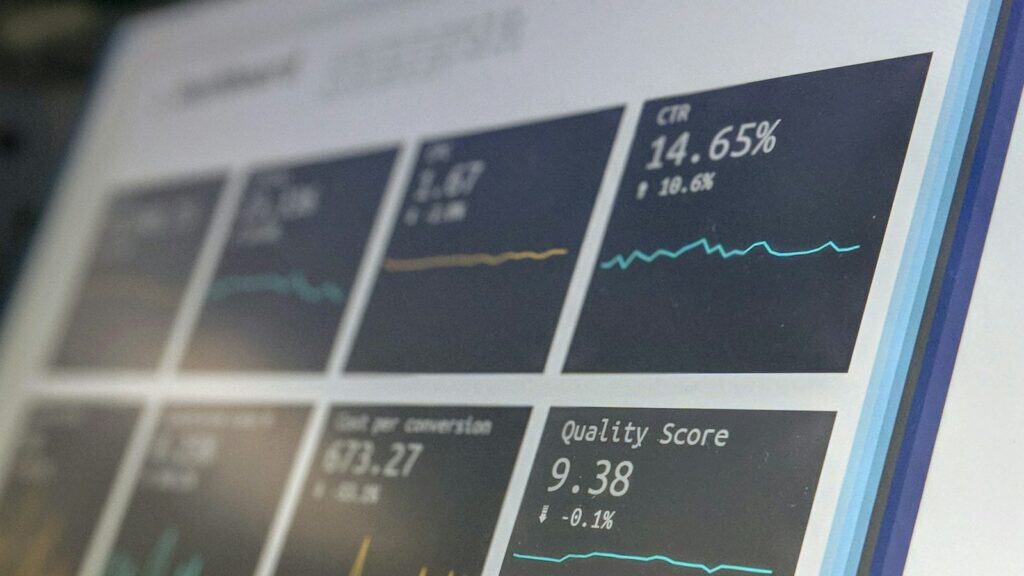
Quality Score is reported on a 1 to 10 scale, and Google builds it from three parts: expected click through rate, ad relevance, and landing page experience. Each part gets its own rating of below average, average, or above average.
So landing page experience is roughly a third of the picture. You can write great ads and still be held back by the page they point at. Google explains the whole system in its Quality Score documentation.
The practical effect is what you pay. Two advertisers bidding on the same keyword do not pay the same price. The one with better ratings usually holds the same position for less. That is the whole reason this metric is worth your time. We list the rest of the levers in 10 ways to boost your Google Ads Quality Score.
What does a “below average” landing page experience actually mean?
It means Google compared your page to other advertisers bidding on the same keyword and found it worse. It is relative, not absolute. Your page can be perfectly nice and still rate below average in a competitive category.
In real accounts, a below average rating is almost always one of three things:
- The page does not match the keyword. You bid on “emergency plumber Dallas” and send people to a general services page. This is by far the most common cause.
- The page is thin. A headline, a form, and forty words of text. There is nothing on it that is relevant and original.
- The page is slow on mobile. Most of your paid traffic is on a phone. Test it on a phone, on mobile data, not on your office wifi.
One more thing worth saying out loud. Landing page experience is estimated at the keyword level, and it updates when Google has enough data. If you fix the page today, the rating does not change today. Give it a few weeks of traffic before you decide the fix did not work.
How do you fix a low landing page experience rating?
Start with relevance, because it moves the rating fastest and costs the least. Match the page to the search, not to your org chart.
Here is the order we work in:

- Group your keywords by intent, then build a page per intent. If you sell three services, you need at least three landing pages. Sending everything to one page is the root of most low ratings.
- Put the keyword phrase in the headline, in normal language. If the ad says “same day AC repair”, the headline should say the same thing. Not something clever.
- Add real content. What is included, what it costs or roughly costs, how it works, who it is for, what happens after they submit the form.
- Add the trust signals. Business name, address, phone number, and a privacy policy linked right next to the form.
- Cut the weight. Compress images, delay chat widgets and third party scripts, and remove anything that is not helping someone decide.
- Remove distractions. On a paid landing page, the site menu usually costs you more conversions than it earns.
We build pages this way as a service. You can see the approach on our landing pages page, and the conversion side of it is covered in the elements that lift landing page conversion rate.
Is landing page experience the same as conversion rate?
No, and mixing them up leads to bad decisions. Landing page experience is Google’s judgment of the page against competing advertisers. Conversion rate is what actually happens on it.
They usually move together, because the same things drive both: relevance, clarity, speed, and trust. But not always. A page can rate above average and still convert badly because the offer is weak or the form asks for too much.
Optimize for both, and treat conversion rate as the one that pays the bills. That is the work covered by conversion rate optimization services.
Common questions
Which attribute describes a good landing page experience?
Relevant and original content. Google also lists transparency about your business and how you handle personal information, easy navigation, and fast load speed. Those four are the complete set that Google publishes.
How do I check my landing page experience rating?
In Google Ads, open the Keywords table, click the columns icon, and add the Quality Score columns. You will get Quality Score plus separate columns for expected click through rate, ad relevance, and landing page experience. Each one shows below average, average, or above average.
Does a faster page always improve the rating?
It helps, but speed alone will not fix a page that does not match the search. If the content is not relevant, a fast irrelevant page is still an irrelevant page. Fix relevance first, then speed.
Can I use my homepage as a landing page for ads?
You can, and it usually rates worse than a dedicated page. A homepage has to speak to everyone, so it matches no specific search well. It also has a full menu, which pulls people away from the action you want.
How long does it take for the rating to change after I fix the page?
Google needs new traffic and new data before it updates the estimate, so plan on a few weeks rather than a few days. Do not roll back a good change because the label did not move in the first week.
Does landing page experience affect anything besides Quality Score?
It feeds into ad rank, which affects both your position and what you pay for it. That is why two advertisers with the same bid can end up in different spots at different prices.
Want someone to look at your pages?
If your landing page experience is sitting at below average across most of your keywords, the cause is usually structural, not cosmetic. Our Google Ads team can review which keywords are rated poorly, which pages they point at, and what to change first.
No pitch, no commitment. Get in touch and we will tell you what we find.