
Ecommerce Landing Pages That Turn Ad Clicks Into Orders
Ecommerce landing pages are standalone pages a store builds for one ad and one offer, so a shopper who clicks a Meta or Google ad sees the product, price, shipping and a buy button right away. Google Search clicks for shopping and gift stores average $4.14, and the median ecommerce landing page converts 4.2% of visitors.
- Designed in Figma, built in Unbounce, then A/B tested
- One product, bundle or launch per page, matched to the ad
- Buy buttons that load your Shopify cart with the offer
Updated November 14, 2026 by Mirza Lacevic, Clickem
Tell us about your business. We reply within one business day.


How ecommerce landing pages are put together
This is a sample bundle page for a Meta ad. Most ecommerce landing page examples in swipe files show the design. Here is the reason behind each part, top to bottom.
Example page for a fictional business.
- Logo only, no store menuThe header shows your logo and nothing else. A full store menu invites a shopper from an ad to browse away from the offer they clicked. A small link back to the store can sit in the footer.
- Headline that repeats the adThe headline uses the same product name, offer and price as the ad. When the page matches what the shopper just saw, they know at a glance they are in the right place and keep reading.
- Price, savings and shippingThe total price, what the bundle saves and the shipping cost all show before any scrolling on a phone. A shipping cost that first appears at checkout is a common reason a full cart gets left behind.
- Only the options that matterShow only the choices that change what ships, like roast and grind. Pre-select the most popular option. Every extra pick is another tap on a small screen and another reason to stop.
- One button into the cartThe button adds the exact bundle, variants and discount code to your store's cart. The shopper finishes in your normal checkout, so payments, taxes and shipping rules stay exactly as they are today.
- Trust lines under the buttonShipping, returns and dispatch time sit right under the button, where the doubt shows up. Keep each line short and true. These are promises, so they must match your store's real policies.
- Reviews and photos belowUnder the fold, real reviews, customer photos and short videos answer the questions a product page leaves open: does it fit, how does it taste, is it worth the price. Never write or edit a review.
Short choices on the page, checkout in your store
A landing page does not replace your store. It sells one offer, then hands the shopper to your cart. On Shopify, a cart permalink can load the cart or checkout with set variants, quantities and a discount code, so the button carries the whole offer across.
That means orders, payments, taxes and stock all stay in Shopify, and every sale shows up in your normal reports. It also means the page should ask for as little as it can. Pick the options that change what ships, pre-select the best seller, and let checkout handle the rest.
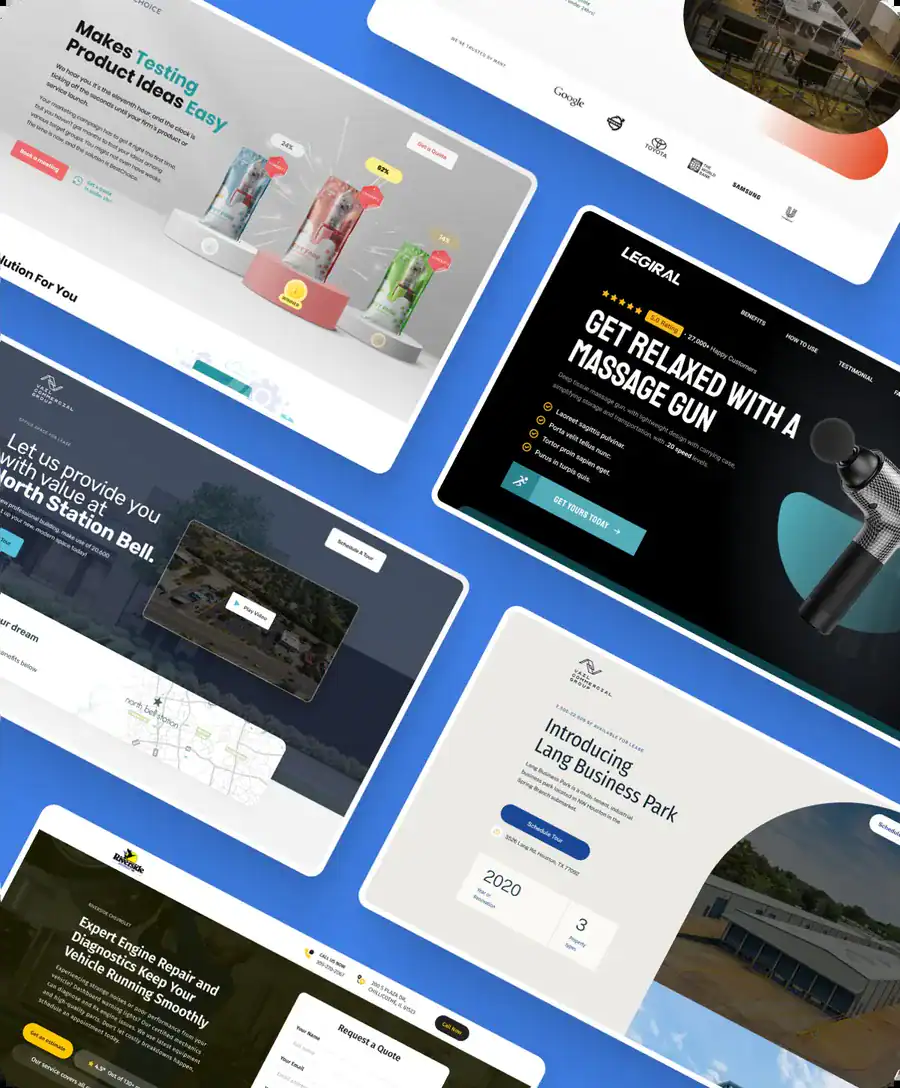
Four A/B tests worth running on a store page
Heatmaps show where shoppers stop scrolling and what they tap. A/B tests in Unbounce settle which version earns more. This is the part of ecommerce conversion rate optimization your ad spend pays for.
Bundle price vs single product price
Show one page with the kit and one with the single item. A bundle often converts a little less but earns more per order, so pick the winner on revenue per visitor, not on conversion rate.
Reviews above the button vs below
Move a short review strip with a star rating up next to the button on one version. Measure add to cart rate and purchases. If doubts are what stop people, the earlier proof should show it.
Video vs photo at the top
Swap the main product photo for a short video of the product in use. Watch scroll depth in the heatmap, then compare purchases. Video can help products that need showing, but it also adds weight to the page.
Free shipping line vs price with shipping
Test "Free shipping" against one all in price that already includes shipping. Both remove the checkout surprise. Measure completed orders, since some shoppers only drop off once they reach the shipping step.
A launch checklist for a store landing page
- Headline uses the same product, offer and price as the ad
- Price, savings and shipping show without scrolling on a phone
- One product or one bundle per page, with no store menu
- Buy button loads the cart with the right variants and discount code
- Purchases fire once, with order value, in Google Ads and Meta
- Page loads fast on a phone over mobile data, checked in PageSpeed Insights
- Returns policy and delivery time sit next to the button
- Only real reviews and customer photos, never written by the store
- UTM tags on every ad so Shopify can tie orders to the page
- Shopping ads still point to the product page, not the offer page
Store clicks cost less, and fewer of them buy
Online stores pay less per Google click than most industries, but fewer of those clicks end in a sale. The page after the click is where that gap gets closed or kept.
About 4 in 100 store shoppers buy after a search click, and apparel sits close at 4.5%. Lift that to 5 in 100 and each order needs 20 clicks instead of 25, on the same ad spend.
| Metric | Online stores | All industries |
|---|---|---|
| Avg. Google CPC | $4.14 | $5.42 |
| Conversion rate | 4.01% | 8.18% |
| Landing page CVR | 4.2% | 6.6% |
Rows 1 and 2: WordStream 2026 Google Ads benchmarks, Shopping, Collectibles & Gifts (closest published category), May 2026. Row 3: Unbounce 2024 Conversion Benchmark Report, medians.
What one more sale per 100 clicks is worth
A worked example on $10,000 a month of Google Search clicks. The click price and starting rate come from 2026 benchmarks. The rest are labelled assumptions.
| Step | Number | Where it comes from |
|---|---|---|
| Monthly Search ad spend | $10,000 | Assumption for this example |
| Average cost per click | $4.14 | WordStream 2026, Shopping, Collectibles & Gifts |
| Clicks per month | about 2,415 | $10,000 divided by $4.14 |
| Orders at 4.01% | about 97 | WordStream 2026 conversion rate for the same category |
| Orders at 5% after tests | about 121 | Assumption: page tests lift conversion rate to 5% |
| Cost per order | $103 to $83 | $10,000 divided by 97, then by 121 orders |
| Extra revenue a month | about $1,920 | 24 more orders, assuming an $80 average order value |
Your click price and order value will differ. Put your own numbers into our Google Ads budget calculator or the ROAS calculator.
How we build a page for your store
From your ad and your best seller to a tested page, usually in about two weeks.
Start from the ad and the offer
We look at the ads you run, your best sellers, your margins and your sale calendar. Then we pick one offer per page, such as a bundle, a launch or a seasonal collection, and match it to one ad.
Design in Figma, build in Unbounce
We design the phone layout first in Figma, then build it in Unbounce. We connect the buy button to your cart, set up purchase tracking with order value, and launch only after you approve.
Test, read heatmaps, keep the winner
Once traffic flows, heatmaps show where shoppers stop and what they tap. We run one A/B test at a time, judge it on revenue per visitor, and keep the version that sells more.
Four mistakes that waste a store's ad spend
Most of these are setup problems, not design problems. They hide in ad settings and tracking, so a good looking page can still lose money.
Sending Shopping ad clicks to an offer page
Shopping ads send clicks to the product page in your feed, not to a separate offer page. Google says that page must show the price, availability and a buy button, with the product as the main focus. So keep product pages strong, and build offer pages for Search, Meta and launches. Google’s landing page requirements list each element.
Letting Performance Max skip your page
Final URL expansion is on by default in Performance Max. It lets Google swap your chosen URL for another page on the same domain that it thinks fits the search better. If you built a bundle page for a campaign, turn it off or use page feeds. Google explains the setting here.
Showing a price the cart does not honor
The ad says $59, the page says $59, and the cart says $80 because the discount code never applied. That shopper is gone, and so is the click. Test every button on a real phone before launch. Check that the code, the bundle and the shipping cost all reach the cart exactly as the page promised.
Picking test winners on conversion rate alone
A page that sells a $25 single item will often convert better than one that sells a $59 kit. That does not make it the better page. Judge every test on revenue per visitor, using purchases tracked once each, with their real order value. Otherwise you may keep the page that earns less.
Send us your best ad and we will plan its page
Tell us the product, the offer and where the traffic comes from. We will sketch the page, the cart hand off and the first test we would run.
Healthcare ecommerce brand
Not a landing page project: a store whose tracking counted page views as sales. Fixing that first is what makes any page test readable.
Read the case studyWhat stores ask us about landing pages
Can I use Shopify as a landing page instead of a separate tool?
Yes, Shopify can host a page or product page that works as a landing page. A separate tool like Unbounce helps when you want many pages for different ads, and A/B tests that do not touch your theme. The button can still load your Shopify cart, so checkout and orders stay in Shopify. Many stores use both.
Should Google Shopping ads go to a landing page or the product page?
Shopping ads go to the product page in your Merchant Center feed. Google requires that page to show the product, its price, its availability and a buy button. So for Shopping, the product page is your landing page, and it is worth improving. Separate landing pages for ecommerce work best for Search ads, Meta ads, launches and bundles.
What do top ecommerce landing pages do that a product page does not?
They serve one ad and one shopper, while a product page serves everyone. The best ecommerce landing pages repeat the ad’s offer, cut the store menu, and answer the questions that ad’s audience has. A cold shopper from Instagram needs the product explained. A shopper who searched the product by name mostly needs the price, shipping and proof.
How much traffic do I need to A/B test a store landing page?
You need enough orders on each version to tell real gains from luck, which means dozens of orders, not a handful. At a 4% conversion rate, 1,000 visitors per version gives about 40 orders each. Run tests in full weeks, since weekend shoppers behave differently. With low traffic, test big changes like the offer, not button colors.
Do landing pages matter as much for Meta ads as for Google ads?
They often matter more. A Meta shopper was scrolling, not searching, so the page has to explain the product as well as sell it. Unbounce’s 2024 data puts the median ecommerce landing page at 4.8% for paid social traffic and 5.1% for paid search. Build for the phone first, since Instagram and Facebook are mostly used in phone apps.
How much does an ecommerce landing page cost to build?
It depends on how many pages, versions and tests you need, so we quote per project after a short call. A first page usually takes about two weeks from brief to launch. Ask any designer whether testing is included, since the first version is rarely the best one. Our landing page service covers the full process.
More for Ecommerce Stores
Guides and free tools that go deeper:
- how we run ads for online stores: Shopping, Performance Max and feeds
- what makes a PPC landing page convert: the basics for any industry
- work out your break even ROAS: before you judge any page
- free landing page headline generator: draft headline ideas fast
Our Technologies
We have expertise across leading platforms.

Book a Free Strategy Call
Pick a time that suits you. We will look at your current pages and ads and tell you what we would do first, whether or not you hire us.
Prefer email? Use the form at the top of this page.


