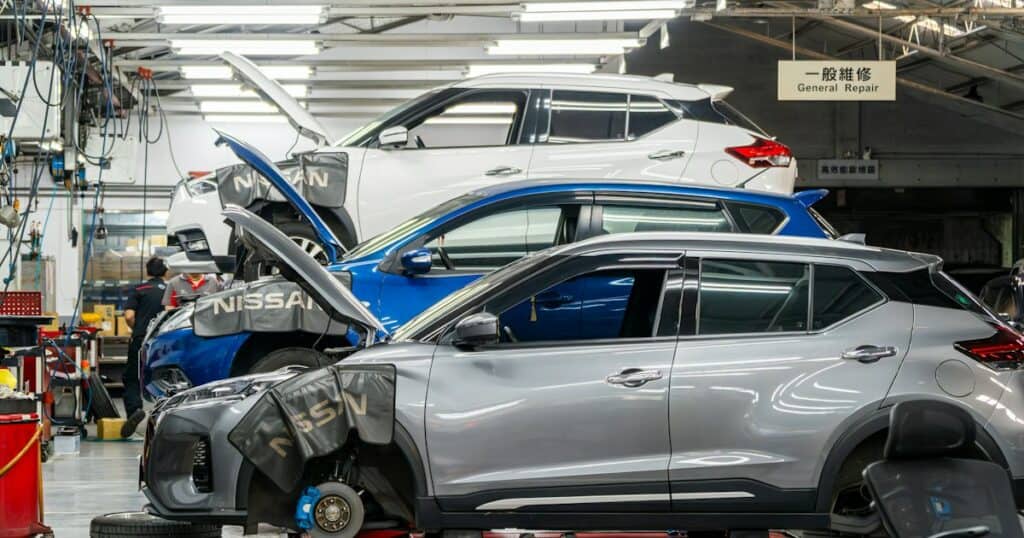
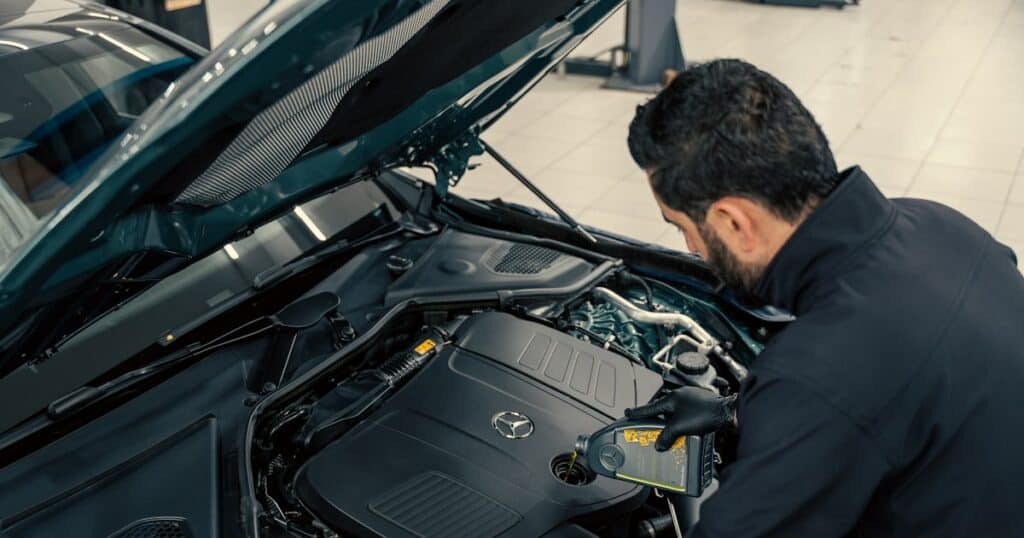
Fixed ops marketing is how a dealership keeps service customers after the factory warranty ends and wins out-of-warranty work back from independent shops. It matters because franchised dealers sold $164.6 billion in service and parts in 2025, yet handled only 29% of US service visits, down from 33% in 2018. Most of that loss happens as cars age out of the dealer’s orbit.
In short:
- Service and parts brought franchised dealers $164.6 billion in 2025, 13.3% of dealership sales dollars, across more than 276 million repair orders (NADA Data 2025).
- Only 54% of owners of cars under two years old who used a dealer for service went back to the dealer that sold them the car, down from 72% in 2023 (Cox Automotive, 2025).
- Owners who serviced at the dealer were far more likely to buy there again: 74% versus 44% (Cox Automotive, 2025).
- The average light vehicle is a record 12.9 years old (Auto Care Association, 2026), and dealers get only 24% of service visits for cars over five years old.
- Repair job keywords cost very different amounts: transmission $7.50, brakes $6.92, AC $6.58, oil change $5.09 and tires $3.29 (Clickem dataset, volume weighted median CPC estimates).
Clickem runs Google Ads and Meta ads for car dealerships, auto repair shops, body shops and auto lenders. This guide is the service drive chapter of our work as an automotive marketing agency, and it pairs with our Google Ads for car dealerships playbook. Where the numbers come from our own data, we link the dataset.
How big is fixed ops for a dealership?
Big enough to deserve its own marketing plan. NADA Data 2025 puts service and parts sales at $164.6 billion for franchised dealers in 2025, or $9.69 million for the average dealership. Dealers wrote 276 million repair orders, about 16,250 per store, at an average customer mechanical labor rate of $186 an hour. Service and parts sales averaged $494 per customer repair order.
The mix matters for marketing. NADA splits 2025 service labor into $31.48 billion of customer mechanical labor and $15.46 billion of warranty labor. Warranty work arrives on its own. Customer-pay work is the part your marketing actually wins or loses. In the first half of 2026, NADA’s midyear report shows fixed ops revenue up 2.2% while average dealership revenue fell 0.9%, and the customer labor rate rose to $192.
One correction worth knowing: many vendor pages say fixed ops produces about half of a dealership’s gross profit. NADA’s current full-year and midyear reports do not publish a fixed ops share of gross profit at all, only share of sales dollars. If someone quotes you that figure, ask for the source and the year.
Where are dealers losing service customers?
Mostly on newer cars, where they used to be strongest. Cox Automotive’s 2025 Service Industry Study shows the dealer share of visits falling fastest for vehicles five years old or less.
| Vehicle age | Dealer share of service visits, 2018 | Dealer share, 2025 | Returned to selling dealer, 2023 | Returned to selling dealer, 2025 |
|---|---|---|---|---|
| Under 2 years | 68% | 55% | 72% | 54% |
| 2 to 5 years | 58% | 45% | 70% | 51% |
| Over 5 years | 24% | 24% | 44% | 37% |
What this means for you: the old assumption was that dealers keep the car until the warranty ends and lose it afterward. The newer problem is that dealers are losing cars under warranty too, and the selling dealer is losing them to other dealers as well as independents. Your marketing has to start at delivery, not at the first lapse.
Cox also shows who is taking the work. In 2025, general repair shops had 27% of visits, quick lubes 14%, tire stores 10% and retail chains 8%, against the dealers’ 29%. The reasons owners give for not returning are an inconvenient location first, then value: “They will overcharge me,” and labor or parts charges they see as unreasonable.
The price perception you can correct
Cox found the average dealership service visit cost $261 in 2025, lower than the $275 average at general repair shops (Cox Automotive). And 55% of owners say being able to compare prices with nearby competitors is an important feature for a dealership website or app. The belief that the dealer is always more expensive is costing you work, and posted prices are how you fight it.
Why does the warranty cliff matter so much?
Because most cars on the road are past it. The Auto Care Association reports that the average light-duty vehicle in operation is a record 12.9 years old, and forecasts the US aftermarket at $599.7 billion in 2026. Dealers held only 24% of service visits for cars over five years old in both 2018 and 2025.
No public study reports retention after the factory warranty ends as a separate number, and warranty terms differ by brand. The over-five-years bucket is the nearest proxy: 37% of those dealer visits go back to the selling dealer. That gap is the market. Every older car in your own sales history is a customer you already know, now buying brakes, tires and AC work from someone else.
What do repair keywords cost, and who are you bidding against?
You are bidding against every independent shop, chain and quick lube in your market, and the price depends heavily on the job. Clickem pulled Keyword Planner estimates for 80 commercial repair and maintenance keywords on October 9, 2026; the full set is in our automotive Google Ads benchmarks.
| Job type | Volume weighted median CPC | Monthly US searches | Peak month |
|---|---|---|---|
| Transmission | $7.50 | 567,600 | Summer (no strong pattern) |
| Brakes | $6.92 | 596,000 | August |
| AC and heating | $6.58 | 416,600 | June to July |
| General (“auto repair near me”) | $5.28 | 3,033,100 | July (repair segment overall) |
| Oil change | $5.09 | 2,239,400 | July |
| Alignment and suspension | $4.86 | 619,100 | March |
| Battery | $4.10 | 387,400 | Winter and late summer |
| Tires | $3.29 | 4,243,700 | July |
What this means for you: these are bid estimates for single exact queries, not your realized cost. WordStream’s 2026 benchmarks for the auto repair, service and parts category show a median realized CPC of $4.35, a 15.51% conversion rate and a $29.96 cost per lead (WordStream, Google and Microsoft Ads combined). Repair search converts well, so the job is to pick the right jobs, not to avoid the channel.
The AC line is the clearest seasonal opportunity in automotive search. Google Trends shows “car ac repair” searches in June running 9.5 times December’s level, with the peak in June or July in all five years from 2021 to 2026. Interest is already at 110 in April and 156 in May. Launch AC campaigns in April and cut them in September.

Watch the make-specific terms too. Independents bid on queries like “bmw repair near me” ($9.67 estimate) and “european auto repair” ($7.93) to position themselves as the dealer alternative for one brand. Those are the searches where your factory training and parts should win, if you show up.
How do dealers win out-of-warranty work back from independents?
By competing on the things independents use against you: price clarity, convenience and specialization. This is the conquest playbook we would build for a franchised store. Our guide to auto repair shop marketing shows the same fight from the independent’s side, and it is worth reading to see what they will do to you.
- Make-specific repair campaigns. “[Make] repair near me,” “[make] service,” “[make] brake repair.” Owners who prefer the dealer cite “They know my vehicle” (54%, Cox study data from 2023). Say it in the headline: factory-trained technicians, genuine parts, your make only.
- Job pages with posted price ranges. Brakes, AC, battery, alignment and oil change, each with a starting price and what is included. Cox found 45% of owners had a frustration at the dealership, and among them, 13% named finding out what it would cost and 12% a final price above the estimate.
- Seasonal job campaigns. AC from April, tires and oil change into July, brakes into August. Fund them from the general service budget instead of running one flat campaign all year.
- A lapsed-customer list. Pull customers from your DMS whose last repair order is more than 12 months old and reach them with an offer for their exact vehicle. Check Google’s Customer Match policies before you upload.
- Local Services Ads, if you qualify. Google’s US category list includes Auto Repair Shop, Oil Change Service, Brake Shop, Tire Shop and Transmission Shop, though Google’s screening page lists tire shops as available only in California and Florida. Eligibility is checked per business and area, and Google says the Google Verified badge is currently unavailable for auto categories. Our Google Ads for repair shops guide covers LSA setup in detail.
The same signals now decide AI recommendations. In Clickem’s October 2026 test of ChatGPT, Gemini, Perplexity and Claude in eight US cities, the 64 answers to “Best auto repair shop in {city} for brakes?” and “honest mechanic in {city}” gave honesty or no upselling as a reason in 70%, pricing transparency in 67% and specialist expertise in 59%. In the four cities where we also pulled Google Maps results, only 31% of repair answers named one of the Maps top three for the same search. Posted prices and make-specific expertise help you in both places; the full test is in our automotive SEO guide.
How does service feed the next car sale?
Directly. Cox found that 74% of owners who returned to the dealer for service in the past 12 months are likely to buy their next vehicle there, against 44% of owners who did not return. And 88% say the service experience affects whether they come back to buy.
The service lane is also an inventory source most stores underuse. Only 14% of owners were given a trade-in value during a service visit, while 33% are highly interested in getting one. Owners start considering a trade-in over a repair when the repair cost reaches $3,195. Build that into your marketing and your process:
- Flag every estimate above about $3,000 for an equity check before the customer leaves.
- Run trade-in offers to service customers with older vehicles, sent to a valuation page, not the new inventory page.
- Track service customers who buy within 12 months, so fixed ops marketing gets credit for the sales it creates.
Buying cars from your own service drive can cost far less than buying them through search: our dataset puts “sell my car” type keywords at a $17.79 volume weighted median CPC. Our used car dealer marketing guide covers the acquisition side.
Worked example: what a customer-pay repair order costs to buy
The inputs below are round examples, except where a source is named. Swap in your own numbers.
| Step | Input | Result |
|---|---|---|
| Monthly service Search spend | $9,000 (example) | |
| Cost per lead (call, booking or form) | $30 (close to WordStream’s $29.96 repair median) | 300 leads |
| Leads that book and show | 50% (example) | 150 repair orders, $60 each |
| Service and parts sales per customer RO | $494 (NADA Data 2025 average) | $74,100 in sales |
| Acquisition cost as a share of RO sales | About 12% |
What this means for you: on these numbers you spend about $60 to win a visit worth $494 in service and parts sales, and the bigger return comes from what follows. A customer who keeps coming back is the one Cox found far more likely to buy the next car from you. Judge service campaigns on repair orders and on the sales they lead to, not on cost per click.
That only works if repair orders flow back into Google Ads. Google now calls classic offline conversion import a legacy feature and recommends enhanced conversions for leads through Data Manager, with “Converted lead” or “Qualified lead” as the goal; since June 15, 2026, API uploads go through the Data Manager API, so check that your DMS or CRM integration still works. Our guide to offline conversion tracking walks through it. Two more settings matter for service: Google now records calls by default in the US and uses AI to decide which count as conversions, and store visit conversions remain available for auto dealerships that pass Google’s privacy thresholds.
How much of the ad budget should go to service?
Set it from a repair order goal, because no public benchmark tells you. NADA reports franchised dealers spent $586,246 per store on advertising in 2025, or $739 per new vehicle sold, but its breakdown is by medium (search 21.1%, listing sites 20.0%, SEO 19.5%), not by department. Nobody can tell you from public data what share the average store gives fixed ops.
Work it the other way. Pick the number of extra customer-pay repair orders you want each month, multiply by your cost per repair order from the example above, and add the seasonal job campaigns on top. Our guide to car dealership advertising budgets shows how to set the sales side the same way, so both departments are funded from outcomes.
Common questions
What is fixed ops marketing?
It is marketing for a dealership’s service, parts and, where it has one, body shop departments. The aim is to keep owners coming back for maintenance and repairs, win out-of-warranty work from independents, and feed the next vehicle sale. NADA puts service and parts at 13.3% of franchised dealership sales dollars in 2025.
Why do customers stop using the dealer for service?
Cox Automotive’s 2025 study lists inconvenient location as the top reason, followed by value concerns such as expecting to be overcharged. Yet Cox also found the average dealer visit cost $261, less than the $275 average at general repair shops. Posted prices and convenient booking address both problems.
When should a dealer run AC service ads?
Start in April and run hard through July. Google Trends shows “car ac repair” searches at 110 in April, 156 in May and peaking at 226 in June, against 24 in December. That makes AC the most seasonal search in automotive repair.
Do service customers really buy more cars from the dealer?
According to Cox, yes. 74% of owners who returned to the dealer for service said they were likely to buy their next vehicle there, compared with 44% of those who did not. Only 14% were offered a trade-in value during a service visit, which is a missed sales opportunity at most stores.
Should a dealership service department run Local Services Ads?
It is worth checking. Google’s US list includes Auto Repair Shop, Oil Change Service, Brake Shop, Tire Shop and Transmission Shop, and you pay per valid lead rather than per click. Eligibility depends on Google’s screening and your area, and LSA is moving into Google Ads as pay-per-lead Performance Max campaigns. The move started with select advertisers in August 2026, and Google has not said when auto categories migrate.
If you want a second opinion on your service marketing, ask us for an account review: share your last 90 days of service campaign data with your customer-pay repair order counts, and we will go through which jobs and keywords look like they are paying for themselves. You can see how we approach automotive accounts on our automotive marketing agency page, or contact us directly.